


Eline De Munck Advocates for New Transition Model ‘Baby's@Work’: “Allow parents to temporarily bring their babies to work”
Entrepreneur Eline De Munck is calling for a smoother transition for parents returning to the workforce with an infant. Specifically, she proposes a transition model called 'Baby's@Work', where mothers and fathers can temporarily bring their babies—aged between three and six months—to work within a clearly defined framework. The transition model aims to offer a potential solution to make the balance between work and parenthood more manageable, particularly in sectors where flexibility is limited and working from home is not an option, such as the retail sector. At Odette Lunettes, Eline De Munck’s Belgian eyewear brand, a pilot project launches today, Wednesday, April 15, 2026, with an employee returning from maternity leave who will bring her baby to work two days a week.
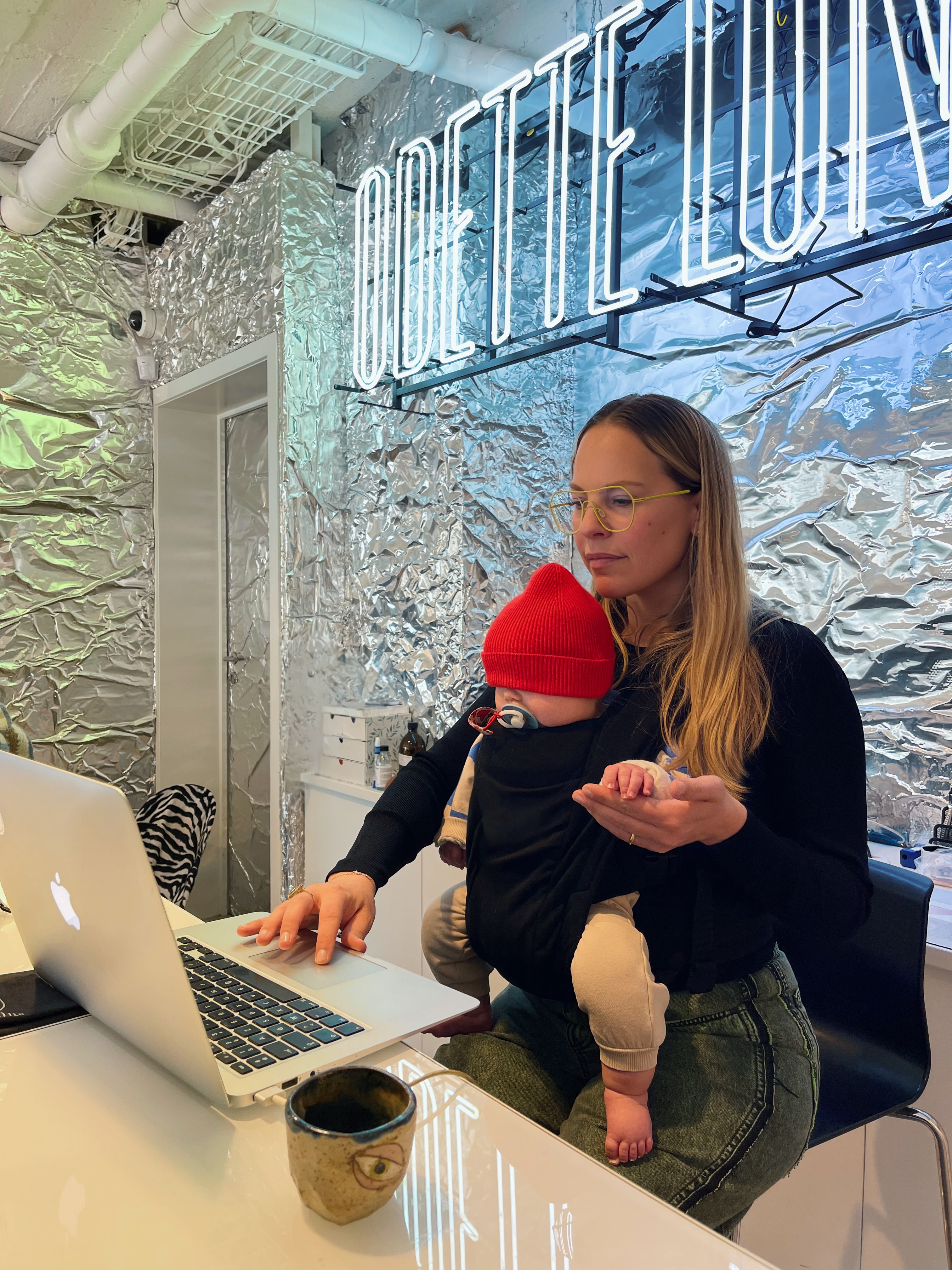
“Today we are losing talent, not because people don’t want to work, but because the system doesn’t allow for a transition between parenthood and work. New mothers are expected to work as if they aren't mothers and mother as if they don't work. This is especially true in sectors like retail, where working from home isn't an option. At the same time, daycares are under enormous pressure. With this Baby’s@Work model, I don’t want to introduce structural childcare in the workplace, but I do want to advocate for a temporary transitional measure. For both moms and dads. Because I believe that work and care can realistically coexist without having to immediately choose an all-or-nothing approach,” Eline De Munck explains.
Child Psychiatrist Peter Adriaenssens: “Everyone stands to gain from this.”
According to Eline De Munck, the current system has reached its limits. The transition from maternity leave to full-time work is currently abrupt, while the reality for parents is more complex. Additionally, childcare is under pressure with long waiting lists and rising costs: “Right now, it’s very black and white. First, you aren't a mother. Then, for three months after the birth, you are exclusively a mother. And then, you have to entrust your baby for five days a week to people who, however professional they may be, are not yet familiar attachment figures. That is quite abrupt for many moms and dads. A gentler transition would help.”
Child psychiatrist Peter Adriaenssens confirms the positive impact of such a transition model for both the parent and the baby: “Research is clear: a secure and steadily built attachment between parent and baby lays the foundation for exploring the world. Everyone stands to gain. Parents who provide a safe space are the best springboard for life; it’s about building resilience. The less stress there is at the start of that beginning life, the healthier it is for both sides: baby and parent. That’s where Eline De Munck's project makes a difference. Strengthen the foundation upon which life must be built by allowing parent and baby to make the transition from home to the outside world more patiently, calmly, and slowly. Join in!!”
Pilot Project Starts at Odette Lunettes; Model is Defined and Temporary
On Wednesday, April 15, the first pilot project of this transition model starts on the shop floor at Odette Lunettes. Maite, mother to baby son Noah, is returning after three months of maternity leave as a retail assistant at the Odette Lunettes store in Roeselare.
“I brought my daughter Colette with me, and now my son Jacomo often comes to work too, even when I’m in the store with customers. That got me thinking: I take my baby everywhere, yet my employees wouldn't be allowed to. That feels hypocritical and wrong. I am very happy that we can start a first pilot project immediately to learn from it and adjust where necessary,” says Eline De Munck.
Concretely, Eline De Munck is applying a clearly defined and temporary transition model in her stores:
Frequency: A maximum of two days per week for full-time employees.
Age: Babies between three and six months old, or until they become mobile and start crawling.
Staffing: At least two employees must be present.
Timing: Not possible during peak times, such as Saturdays.
Employee Maite reacted enthusiastically to the proposal: “I was quite anxious about having to 'give Noah up' for a whole week so soon to go back to work. Then Eline proposed this transition model, and we made clear agreements around it. I am very grateful for an employer who wants to look at how this can be made workable together.”
The Village', now also in the workplace
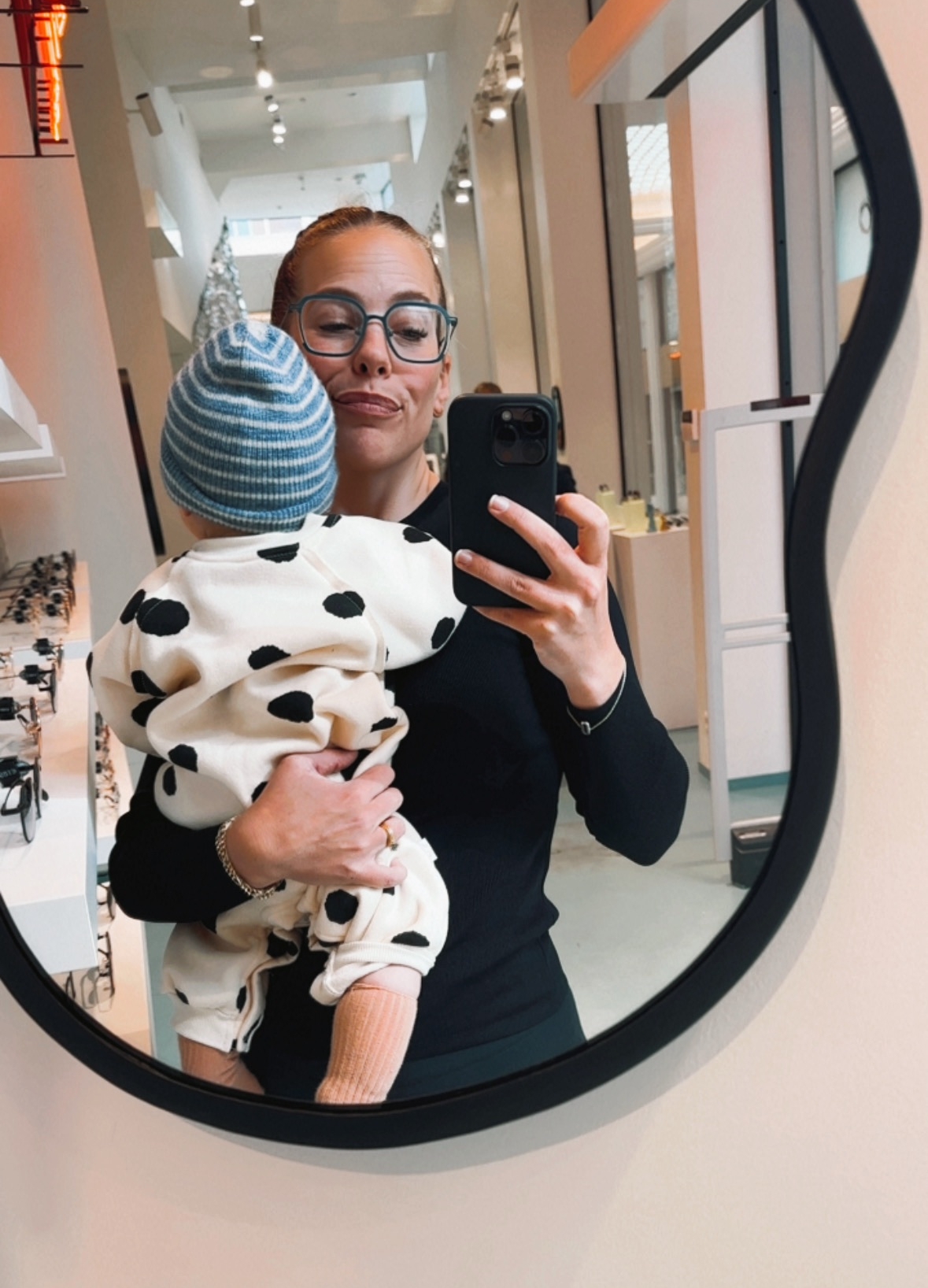
For ‘Baby's@Work’, Eline De Munck draws from her own experience as both an entrepreneur and a mother. Additionally, just one week before her son Jacomo was born, she was informed that her daycare would suddenly be closing: “As a self-employed person, I can be more flexible in seeking solutions. But what about employees for whom that isn't so simple? When childcare falls through, the ability to work disappears for many.”
According to Eline, the solution lies in employers thinking flexibly about how to support working parents when they return to work: “We often talk about ‘the village’ needed to raise a child. I am advocating for a similar ‘village’ in the work environment to help carry the load. During the pandemic, flexibility was possible when it had to be; back then, so many parents worked with their babies in slings. What was possible then out of necessity shouldn't be fundamentally impossible today, provided there is a clear framework and boundaries.”
In the workplace, this transition model could lead to less absenteeism and turnover, and more sustainable careers. It also takes into account the biological and neurological transformation of parenthood. After all, parents are currently expected to abruptly trade the physical and hormonal bond of the early days for total professional focus, without their child nearby. A gradual transition with extra proximity acknowledges this biological reality instead of ignoring it.
Extra relevance for the retail sector
Eline De Munck points out that employees in the retail sector are often hit particularly hard: “Especially in sectors where flexibility is limited and working from home is not an option, like retail, the combination of working and caring is very fragile. Daycares often close at the same time as stores, and they aren't open on weekends. The sector also predominantly employs women. As a result, this balance is under structural pressure, with an increased risk of absence, stress, and burnout.” Beyond this specific sector in which Eline De Munck operates, the transition model is applicable to any organization or sector, depending on job requirements and operational reality.
Eline realizes that not every parent will want to use this transition model, nor is it applicable to every role within an organization—or even every baby: “But it’s about creating the possibility for those who do want it and for the babies for whom it works. Just as working from home is possible for certain roles and not others, this model will depend on the job description and what is operationally feasible. At the same time, I advocate for the government to support such a transition model and make it possible for employers to implement this on a larger scale.”
The fact that this is being considered is a major step forward, confirms labor economist Stijn Baert: “It was recently the headline of a blog post regarding our research: Working parents are willing to trade a 20% pay raise for childcare at work. In other words: employers who involve themselves in arranging childcare for their employees stand a good chance of winning the war for talent. We can only applaud ideas like Eline’s. And evaluate them thoroughly. Because words may inspire, but examples lead the way.”
Transparency for customers and visitors: unique icon designed by Jeroom
To communicate transparently to customers and visitors that babies are welcome, a new pictogram/icon/symbol has been created to be placed on the door of the workplace. The design is by cartoonist Jeroom: “I am happy to put my weak shoulders under initiatives like this.”
With ‘Baby's@Work’, Eline hopes to open a conversation about how work and care can better align, with respect for employees, colleagues, customers, and organizations. “I acknowledge there are many potential objections and many potential benefits. Let’s look at this pragmatically, because the proposal is intentionally temporary, defined, and role-specific, leaving room for adjustments. If we wait for a model that is completely watertight, identically applicable to everyone, and free of all risk, nothing will ever change. But it is also ideological, because it stems from a human perspective where care is allowed to be visible in the workplace and young parents should not be punished for their family choices,” Eline De Munck concludes.